
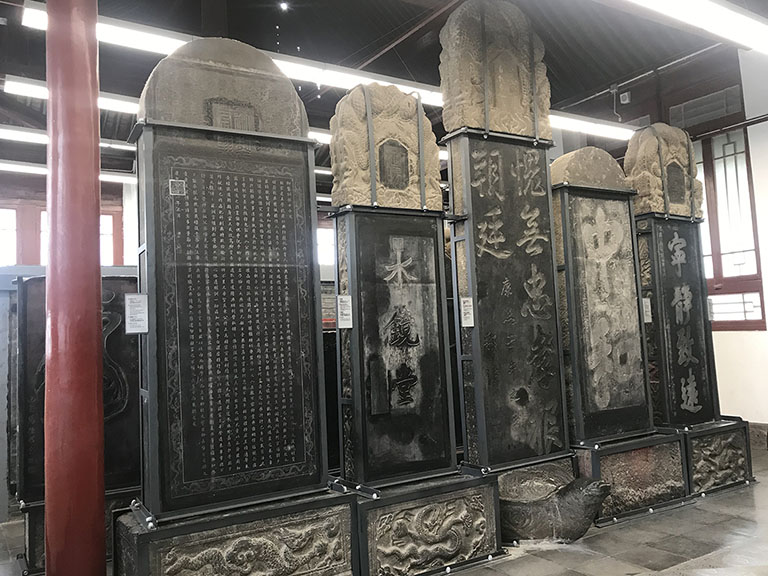
For travelers with a passion for history, language, and the enduring beauty of Chinese civilization, few destinations in Xi’an offer a more profound—and quietly majestic—experience than the Beilin Museum, also known as the Forest of Stone Steles (Beilin Shike Yishu Bo Wu Guan). Nestled in the heart of Beilin District, this world-renowned museum houses over 3,000 ancient stone tablets, steles, and sculptures spanning 2,000 years of Chinese intellectual and artistic heritage—including the complete Confucian Classics, imperial edicts, Buddhist sutras, and some of the most celebrated works of Chinese calligraphy ever carved in stone.
And if you’re staying at OrangeHao Hotel—located at No.16 Huancheng South Road, Beilin District, Xi’an, Shaanxi 710000, China—you’re in a uniquely privileged position: the Beilin Museum is just a 7-minute walk (600 meters) from your doorstep. No taxis, no metro transfers—just a serene stroll down tree-lined streets past traditional courtyards, leading you directly into one of China’s oldest and most scholarly cultural sanctuaries.
In this detailed, SEO-optimized guide, we’ll explore why the Beilin Museum is a must-visit for culturally curious travelers, what you’ll see inside, how to navigate its halls like a connoisseur, and how your stay at OrangeHao Hotel makes this deep dive into China’s literary soul effortless, enriching, and unforgettable.
Why the Beilin Museum Matters: More Than Just Stones
Established in 1087 during the Northern Song Dynasty, the Beilin Museum began as a repository for stone classics—Confucian texts carved into stone to preserve their accuracy and prevent textual corruption. Over centuries, it evolved into China’s premier collection of epigraphic art, calligraphy, and stone sculpture, earning its poetic name: “Forest of Stone Steles”—a place where history stands upright, silent yet speaking across millennia.
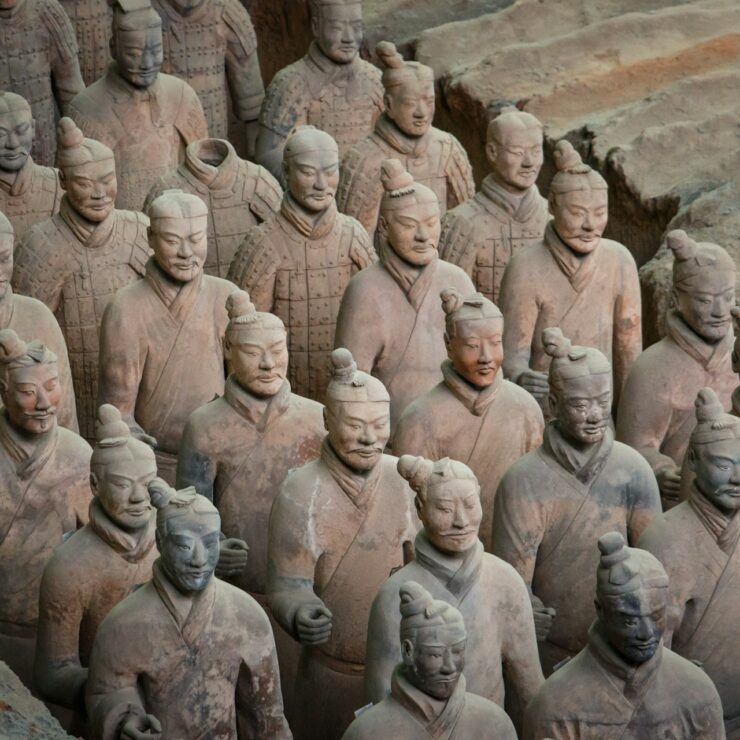
Today, it’s a UNESCO Memory of the World-recognized site and one of the Eight Great Sights of Xi’an. Unlike the Terracotta Warriors’ spectacle or the City Wall’s grandeur, the Beilin Museum offers an intimate, contemplative journey into the mind of ancient China—where emperors, scholars, monks, and artists left their thoughts in ink, then in stone.
What You’ll Discover Inside: Highlights of the Collection
The museum is organized into seven exhibition halls, each dedicated to a different era or theme. Here are the unmissable treasures:
1. The Confucian Classics Steles (Kai Cheng Stone Classics)
Carved in 837 CE during the Tang Dynasty, these 114 stone tablets contain the complete Thirteen Classics of Confucianism—the foundational texts of Chinese philosophy, ethics, and governance. For centuries, scholars came here to make rubbings and study the original wording. Today, they stand as a monument to China’s reverence for learning.
2. Masterpieces of Calligraphy
The Beilin is often called the “Mecca of Chinese Calligraphy.” Highlights include:
- “The Inscription of the Nine-Dragon Spring” by Yan Zhenqing (Tang Dynasty)—a bold, powerful style that defined楷书 (regular script).
- Works by Wang Xizhi, the “Sage of Calligraphy,” whose Preface to the Orchid Pavilion is represented in rare stone copies.
- Cursive, seal, clerical, and running scripts—showcasing the evolution of Chinese writing over 1,500 years.
3. Stone Sculptures & Buddhist Art
Hall 6 features exquisite Tang and Han Dynasty stone carvings, including:
- Flying Apsaras (celestial musicians) with flowing scarves
- Stone lions and tomb guardians
- Buddhist steles with intricate lotus motifs and donor inscriptions
4. The Nestorian Stele (Da Qin Jing Jiao Liu Xing Zhong Guo Bei)
One of the museum’s most fascinating artifacts: a 781 CE stone tablet documenting the arrival of Nestorian Christianity in Tang-era China—written in Chinese and Syriac, it’s a testament to Xi’an’s role as a global crossroads on the Silk Road.
Visitor Experience: Practical Tips for a Meaningful Visit
- Location: 15 Sanxue Street, Beilin District, Xi’an (600m from OrangeHao Hotel—walk east on Huancheng South Road, turn left at Dong Dajie, then right onto Sanxue Street).
- Opening Hours:
- March–November: 8:00 AM – 6:00 PM (last entry 5:00 PM)
- December–February: 8:00 AM – 5:30 PM
- Entrance Fee: ¥65 (students/seniors with ID: ¥35)
- Recommended Time: 1.5–2 hours (less crowded on weekday mornings)
- Guided Tours: Audio guides available in English (¥30); private guides can be arranged through OrangeHao concierge.
- Photography: Allowed without flash; tripods require permission.
📜 Pro Tip: Don’t rush. Sit on a bench in Hall 2 and simply observe the brushstrokes—each curve and stroke carries the personality of its creator.
Why Staying at OrangeHao Hotel Makes It Effortless
Imagine this:
- 9:00 AM: Enjoy a quiet breakfast of congee and steamed buns at our on-site restaurant
- 9:15 AM: Stroll past historic courtyard homes to the Beilin Museum
- 9:30 AM: Enter before the tour groups arrive, savoring the halls in peaceful solitude
- 11:30 AM: Return to your room for a rest—or continue to the nearby City Wall South Gate (10-minute walk)
At OrangeHao Hotel, you’re not just near the Beilin Museum—you’re embedded in the district that bears its name. Our staff, many of whom grew up in Beilin, can share stories about the museum’s hidden corners, recommend which calligrapher’s work resonates most with first-time visitors, and even explain the meaning behind the characters on your favorite stele.
Plus, after an hour of scholarly immersion, you can unwind in your modern, tranquil room—where ancient Xi’an meets contemporary comfort.
Combine Your Visit: Cultural Itineraries from OrangeHao Hotel
The Beilin Museum pairs perfectly with other nearby sites:
- Morning: Beilin Museum → Shuyuanmen Cultural Street (5-min walk; calligraphy shops, inkstones, antiques)
- Afternoon: Walk to Xi’an City Wall South Gate (10 mins) for a bike ride or sunset views
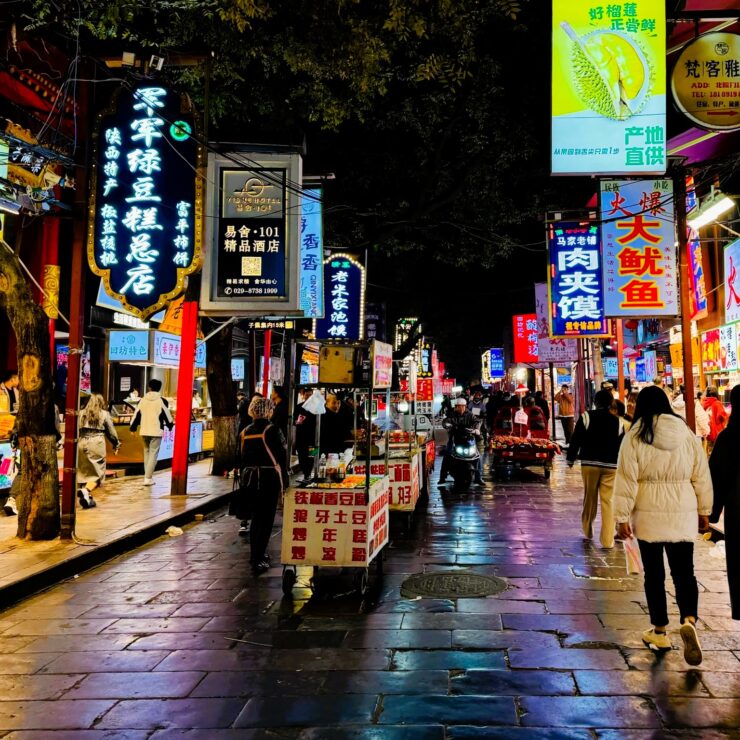
- Evening: Dinner in the Muslim Quarter (15 mins) to contrast scholarly calm with vibrant street life
For a full “Scholar’s Day in Xi’an,” our concierge can arrange a calligraphy workshop or tea ceremony in a traditional courtyard—completing your journey from stone to soul.
Final Thoughts: A Sanctuary for the Curious Mind
In a city famed for warriors and walls, the Beilin Museum offers something rarer: stillness, depth, and intellectual beauty. It’s where China’s greatest thinkers speak through stone, where every character is a brushstroke of history, and where the weight of wisdom feels tangible.
And from your home at OrangeHao Hotel, this sanctuary isn’t a distant attraction—it’s your neighborhood, your morning ritual, your quiet escape.
Come. Walk among the stones. Listen to the whispers of sages. Let Xi’an’s literary soul move you.
Your journey into the heart of Chinese civilization begins just steps from your door.